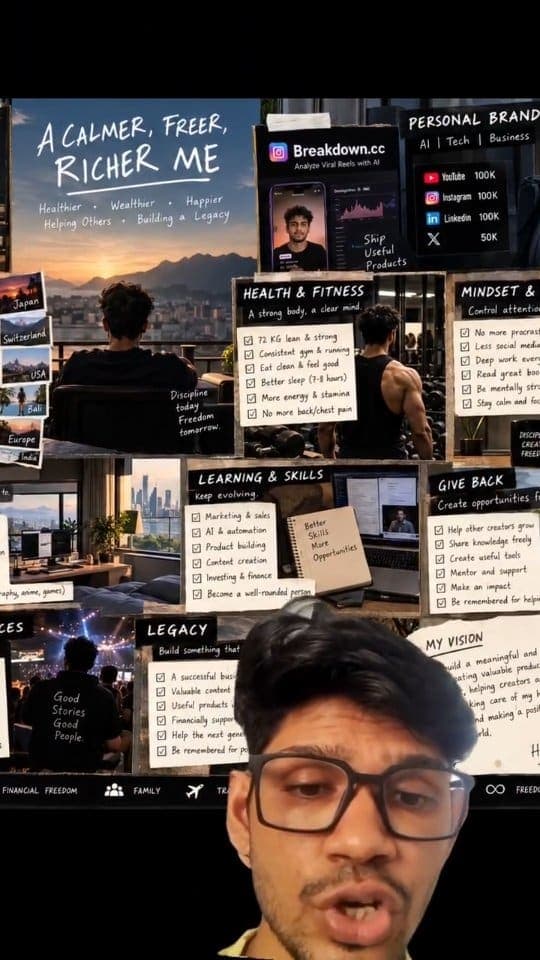
This reel generated 273,677 views against a creator baseline median of 421 views—an outlier multiple of 642x.
The Hook
The video opens with the creator speaking directly over a graphic asset:
"Apne ChatGPT pe jao aur give this image, and ask it to fill out that represents you. (Go to your ChatGPT and give this image, and ask it to fill out that represents you.)"
This is a curiosity-gap hook structured around an immediate directive. It does not begin with background context or self-introduction; it tells the viewer to execute a specific prompt using a visual asset displayed directly on screen. By framing ChatGPT as a tool that can assess the user's personality, it sets up an immediate open loop around what the AI output will reveal.
The Structure
The 60-second video follows a clear progression across six distinct beats:
- 0s (Hook): The creator establishes the premise over an image of an empty metal pocket tin, directing viewers to give the asset to ChatGPT to fill out what represents them.
- 6s (Context): The background transitions to a completed tin filled with personal artifacts. The creator validates the concept, stating that the tool will generate representations of the viewer to test whether the output feels accurate.
- 14s (Demo): The concept escalates from novelty to long-term planning. The asset switches to an aesthetic 5-year vision board graphic generated by the tool as a positive aspirational framework.
- 28s (Anti-Vision Concept): The visual tone shifts to a dark, cluttered graphic. The creator introduces the "anti-vision board," defining it as the visual manifestation of bad habits and obstacles keeping the viewer stuck.
- 47s (Payoff): The narrative synthesizes both assets. The creator explains how to compare the anti-vision board against the positive vision board, creating a daily contrast between what to avoid and what to implement.
- 56s (CTA): The video cuts hard from the green-screen interface to a full-frame shot of the creator in front of a real bookshelf, directing viewers to the caption for the prompt and suggesting a follow.
What Transfers
Three distinct technical and narrative choices explain why this format held attention through the full duration:
- Dual-State Payoff: Rather than relying solely on an aspirational outcome (the 5-year vision board), the narrative introduces the anti-vision board at 28s. Contrasting the positive target with an explicit visual representation of failure introduces loss aversion, extending viewer interest past the initial demonstration.
- In-Asset Green Screen Staging: Throughout the first 56 seconds, the creator’s keyed cutout is placed in the bottom 30% of the screen. This leaves the top 70% clear for graphic assets (the empty tin, the filled tin, the vision board, and the anti-vision board), allowing the viewer to watch the UI outputs update in sync with the script.
- The Outro Snap: At 56 seconds, the presentation mode breaks abruptly. Switching from the green-screen overlay to a real-world camera shot creates an immediate visual reset right as the creator delivers the call to action, disrupting passive viewing at the video's conclusion.
This breakdown was written by Breakdown's own analysis engine from the reel itself. Every figure above — views, baseline, the hook line — comes from that post, not from an estimate.
Want this for your own niche? Drop any creator onto the canvas and get the same breakdown.
Start free